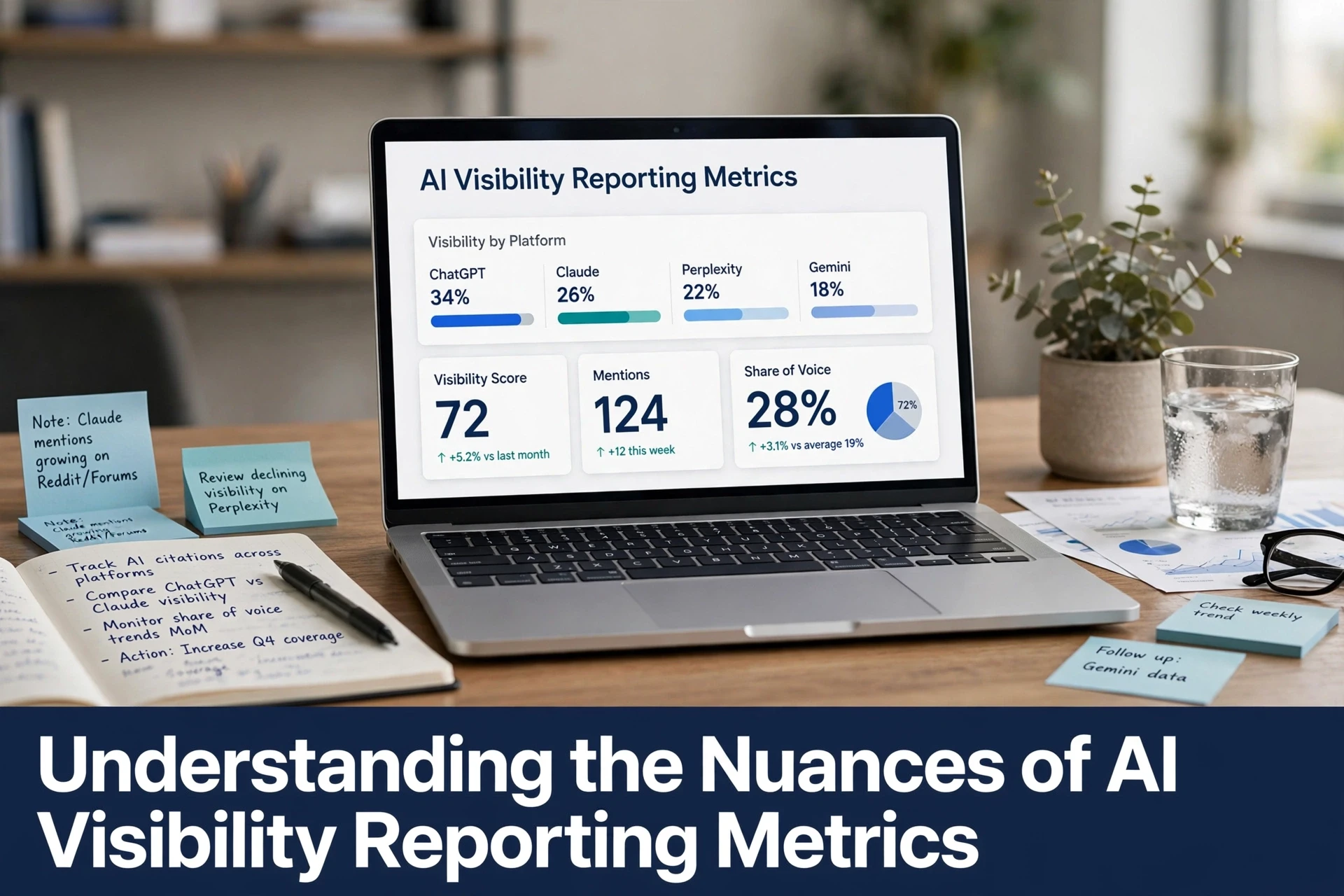
Quick Summary: AI visibility metrics are probabilistic and volatile, so single scores can mislead even when the same prompt returns different brands within hours. Track share of voice, mentions, citations, prompt coverage, and mention position together, using a fixed prompt set, repeated weekly runs, and separate platform results to expose prompt bias and model differences. Pair these trends with referral traffic, conversions, and branded search, and SnowSEO supports this approach through prompt-level sampling and per-engine dashboards.
Ask ChatGPT the same buying question twice, ten minutes apart, and you may get two answers, and sometimes two different brands. That is not a glitch in your tracker. It is the core fact behind AI visibility metrics: measurements of how often and how favorably AI engines mention your brand. This guide explains what each metric hides, why the data swings so much, and how to build client reports that hold up. We write it from years of work in rank tracking and generative engine optimization reporting.
Table of Contents
Why AI Visibility Metrics Do Not Behave Like Rankings

There Is No Position 1: Visibility Is Probabilistic
Classic rankings are stable. A page sits in position 3 all day. AI answers are not. Each time a model generates a response, it writes fresh text, so your brand may appear, be cited, or vanish entirely. A "position" in ChatGPT is really a probability, which means AI visibility metrics report likelihoods, not fixed slots.
Volatility Is the Baseline, Not the Exception
Because models resample and update, the same prompt can produce a different answer within hours. That AI answer volatility is normal, not a tracking bug. Run each prompt multiple times and treat shifts as trends, not day-to-day noise. SnowSEO's prompt-level tracking is built around this idea: it samples repeatedly so the reported share reflects an average, not one lucky answer.
The Core AI Visibility Metrics and What Each One Conceals
Metric | What it measures | Blind spot |
|---|---|---|
Share of voice | How often your brand appears versus competitors | Only comparable across identical prompt sets |
Mention rate | Whether your brand is named in an answer | Ignores sentiment and accuracy |
Citation rate | Whether a link to your site is included | A name without a link still reads as a win |
Position of mention | Where you appear in the answer | Hides the prompt count behind it |
Each number answers a different question. The trap is treating any single one as proof of progress.
Share of Voice and Why It Is Only Comparable Across Identical Prompt Sets
Share of voice compares your appearances against competitors, but only when both sides are measured on the same prompt set. Change the prompts and the percentage moves.
Citation Rate, Citation Share and the Gap Between Being Named and Being Linked
Mention rate tells you your brand was named. Citation rate tells you a source was linked. Being named without a link sends no traffic, so track citation share alongside AI search visibility gains.
Sentiment and Accuracy: Being Mentioned Badly Still Counts as Visibility
Most dashboards score a mention as a win even when the answer misstates facts or frames your brand poorly. Sentiment tracking separates real wins from reputational risks hidden inside "visibility".
Prompt Coverage and Position of Mention: The Denominator Behind Every Other Number
Prompt coverage shows how many tracked prompts surfaced your brand at all. Position of mention shows placement within each answer. Together they set the ceiling on every rate your report displays.
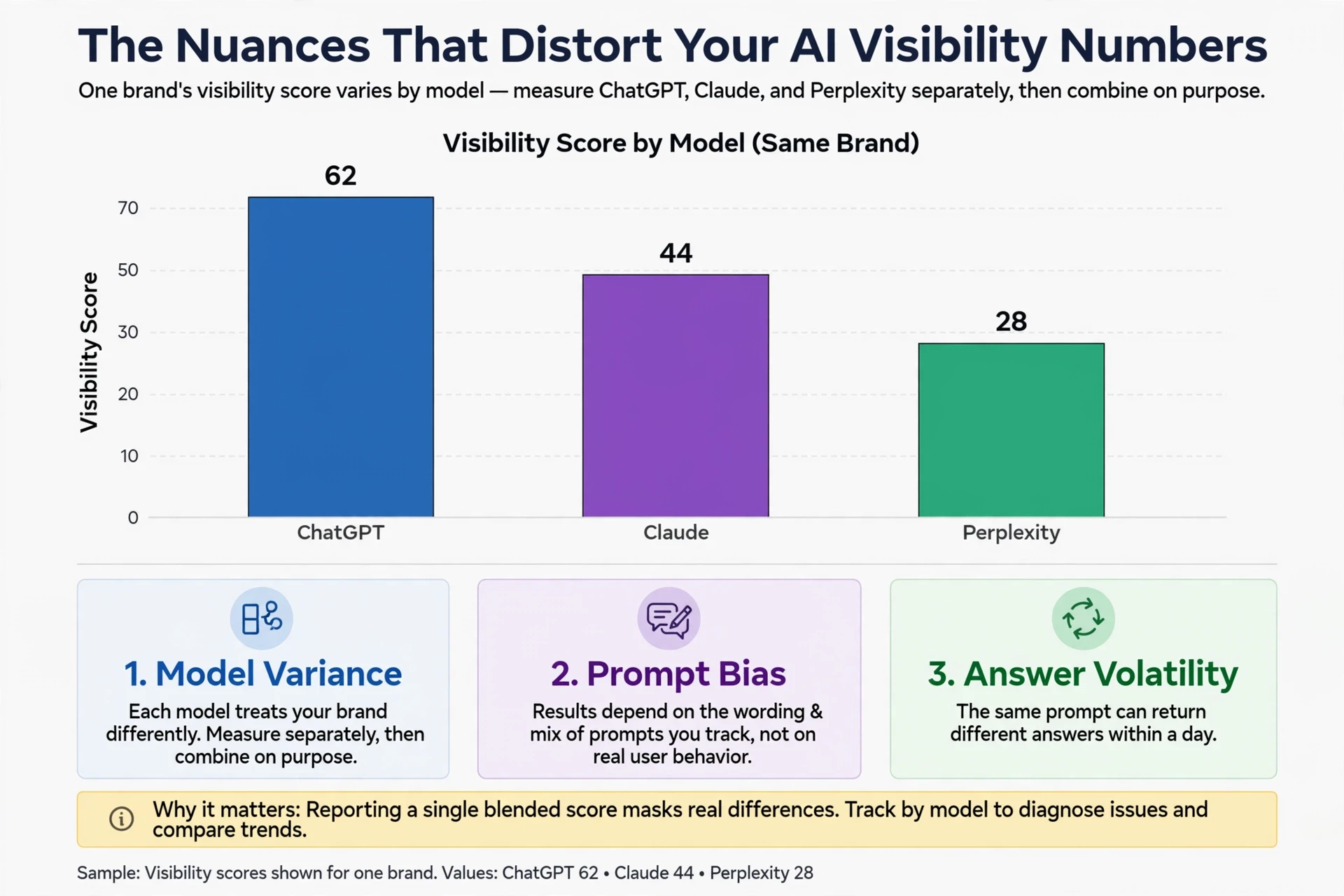
The Nuances That Distort Your AI Visibility Numbers
Before you trust any dashboard score, know what bends it. Three nuances distort most AI visibility metrics:
- Platform weighting. A blended score hides how differently each model treats your brand, so measure ChatGPT, Claude and Perplexity separately, then combine on purpose.
- Prompt bias. Results depend on the wording and mix of prompts you track, not on real user behavior.
- Answer volatility. The same prompt can return different answers within a day.
Platform and Model Fragmentation: Your Score Is a Weighted Average You Should Declare
Each model leans on different sources, so one blended number can mask a weakness on the platform your buyers actually use (side-by-side model comparisons show this clearly). Declare your platform mix in every report. SnowSEO breaks scores down per engine so that split stays visible.
Synthetic Prompt Bias and the Drift of Your Prompt Library
Your prompt library is synthetic: it reflects what you chose to ask, not what users type. Prompts also go stale as products, wording and markets change, so coverage drifts quietly. Audit the library quarterly and log every edit, or month-over-month shifts may be library drift, not real performance change.
Reporting AI Visibility Metrics Without Misleading Your Stakeholders
Set a Baseline, Fix the Run Rate and Report the Trend
Measure weekly and report monthly. Pick one prompt library, lock it, and track changes against your first snapshot rather than day-to-day noise. Because AI answer volatility makes single readings unstable, a moving average or trend line tells the truth better than any one score.
Pair Visibility with Referral Traffic, On-Site Search and Pipeline
Visibility alone proves little. Add AI referral traffic, assisted conversions and branded on-site search so stakeholders see revenue impact, not just mention counts. Trend dashboards in SnowSEO combine these signals, so a citation rate rise links directly to pipeline growth you can defend.
Your AI visibility reports shouldn't raise more questions than they answer. SnowSEO tracks both search and AI rankings in one dashboard, so you can show clients numbers that hold up.
Frequently Asked Questions
Q1: What are the specific nuances in metrics when tracking AI search visibility?
Platform weighting, prompt bias and answer volatility distort most numbers. Measure each engine separately, declare your prompt set, and treat shifts as trends.
Q2: How many prompts should I track for reliable AI visibility data?
Track enough prompts to cover your buying topics, then lock the set. Run each multiple times weekly so averages absorb volatility.
Q3: What is a good citation rate for AI answers?
There is no fixed benchmark; it varies by platform and topic. Compare against your own baseline and your competitors on the same prompt set.
Conclusion
AI visibility metrics need context. Track share of voice, mention and citation rates, prompt coverage and position of mention together, declare your prompt library, and report trends instead of single scores so clients trust your numbers.