
Quick Summary: Voice and AI search visibility depends on mapping real conversational questions to the sub-questions AI engines cite, not just optimizing short keyword phrases. Build content around each entity's tools, metrics, causes, and fixes, then track a fixed set of 20 to 50 prompts weekly or monthly for citations, mentions, and share of voice. SnowSEO supports this workflow by combining conversational keyword discovery, content audits, and AI visibility tracking, while competitor mentions reveal the next content gaps to address.
Your keyword list is probably full of phrases nobody says out loud. "Best running shoes for flat feet" reads like typing. People ask assistants: "I have flat feet and my knees hurt, what running shoes should I get?" That gap decides most voice and AI visibility. This guide fixes it with keyword research for AI search: sourcing real conversational queries, mapping query fan-out into citable sub-questions, and tracking your share of AI answers instead of guessing.
Table of Contents
Step 1: Find the Real Conversational Queries Behind Voice and AI Searches
Voice and AI search demand a shift in keyword research tactics. Instead of short head terms, people type or speak full questions: "running shoes" becomes "what running shoes work for flat feet?" For AI prompt keyword research, list each head term, then rewrite it as a natural question with a qualifier. Voice search keyword research works the same way. Keep the before-and-after list beside you as you plan:
Head term | Conversational rewrite |
|---|---|
CRM software | best CRM software for a five-person team |
protein powder | is protein powder safe for teenagers |
email marketing | how often should I send marketing emails |

Rewrite Head Terms the Way People Actually Ask
Take each seed keyword and rephrase it as someone would say it aloud. Add intent words like "best," "how," "vs" or "near me." Then expand: one head term often hides a dozen long-tail question keywords. This is where keyword research for AI search starts.
Mine Real Phrasing From Search Console and AI Assistants
Your own data beats guessing. Pull queries from Search Console that contain "how," "why" or "can," and note the exact wording. Then ask ChatGPT or Claude your topic questions and record the phrasing they trigger. Tools built for this, like SnowSEO's prompt-level keyword workflow, combine intent with location data. Save every variant; you'll map them next.
Step 2: Map Query Fan-Out Into the Sub-Questions AI Engines Actually Cite
What Query Fan-Out Means for Your Content Map
Query fan-out in AI search is when an engine splits one user question into many related sub-questions, searches each one, then blends the answers. So a single prompt like "how do I rank in ChatGPT" becomes several hidden searches. Worked example:
- "what does ranking in ChatGPT mean"
- "how AI answer engine citations work"
- "steps to get cited by ChatGPT"
Map each fan-out branch to its own heading or FAQ block, so your page answers every sub-question the engine asks.
Build Entity and Attribute Coverage
Entity-based keyword research means covering a topic's core entity (say "email deliverability") plus its attributes: tools, metrics, causes, fixes. AI engines cite pages that answer attributes cleanly, not pages that only repeat the head term. List each entity, brainstorm 10-15 attributes, and check which attributes your page covers with a tool like SnowSEO's audit. Then add one tight section per missing attribute. That coverage is what earns citations.
onium
Step 3: Validate Visibility and Feed New Queries Back Into Research
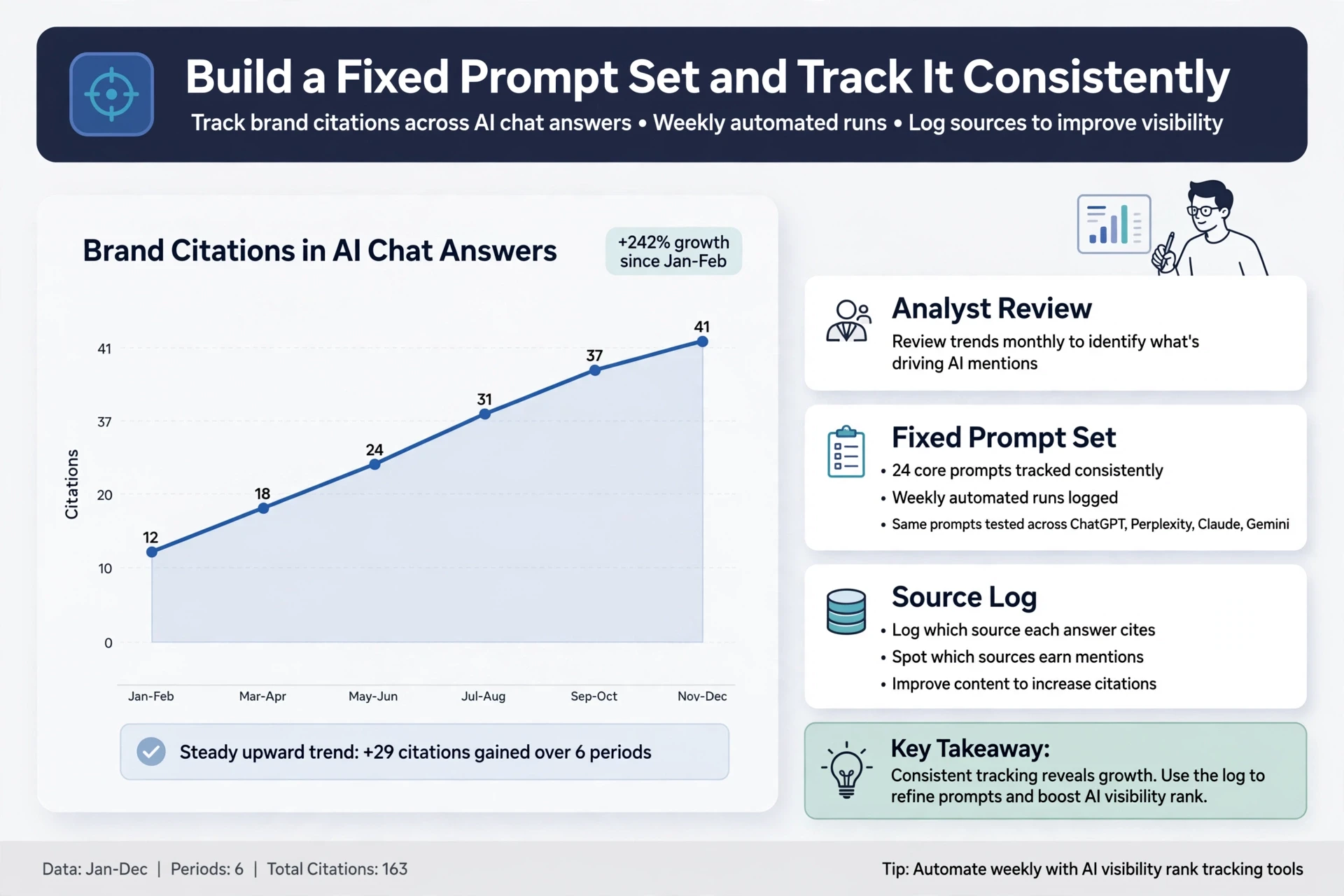
How many AI prompts should I track for visibility? Most teams get solid signal from 20 to 50 prompts. Keep it simple:
- Pick 20-50 prompts that mirror real conversational queries.
- Run the same set on a fixed schedule, weekly or monthly.
- Log citations, mentions and share of voice in AI answers each run.
Build a Fixed Prompt Set and Track It Consistently
Change nothing between runs. New prompts distort trends, so park fresh queries in a backlog until the next review. A fixed set shows whether your AI answer engine citations grow or slip, and tools with AI visibility rank tracking automate the weekly runs for you. Log which sources each answer cites so you know what earned the mention.
Close the Loop When a Prompt Mentions a Competitor Instead
When an answer cites a rival, treat it as free keyword research. Note the exact phrasing, the cited source page and the sub-question the engine answered. Map that phrasing back into your keyword set, build or improve a page that answers it better, then re-run the prompt next cycle. Competitor mentions are the fastest signal for where your entity coverage has gaps.
Never delete a prompt that loses. Losing prompts point straight at your biggest content gaps.
Your keyword research can reach voice assistants and AI answers, not just classic rankings. SnowSEO tracks both from one dashboard. Try it at SnowSEO and see where you stand today.
Frequently Asked Questions
Q1: How do voice and AI search queries require a shift in keyword research tactics?
Stop optimizing for short head terms and start mapping full conversational questions. Rewrite each head term with intent words like "best" or "how," then expand into long-tail question keywords and map query fan-out branches to headings AI engines can cite.
Q2: How many prompts should I track for AI visibility?
Start with a fixed set of 20-50 prompts that mirror real queries. Run them weekly or monthly, change nothing between runs, and log citations and share of voice each cycle.
Q3: What should I do when an AI answer cites a competitor instead of me?
Record the exact phrasing and cited page, map that sub-question into your keyword set, build a better answer, then re-run the prompt next cycle.
Q4: How do I find the exact wording people use with voice assistants?
Pull "how," "why" and "can" queries from Search Console, then ask ChatGPT or Claude your topic questions and save every phrasing variant they trigger.
Conclusion
Good keyword research for AI search comes down to three moves: source real conversational queries, map query fan-out into citable sub-questions, and prove results with prompt set tracking. Run that loop each cycle and your AI answer engine citations keep growing.